The Volunteers
Now It's by You
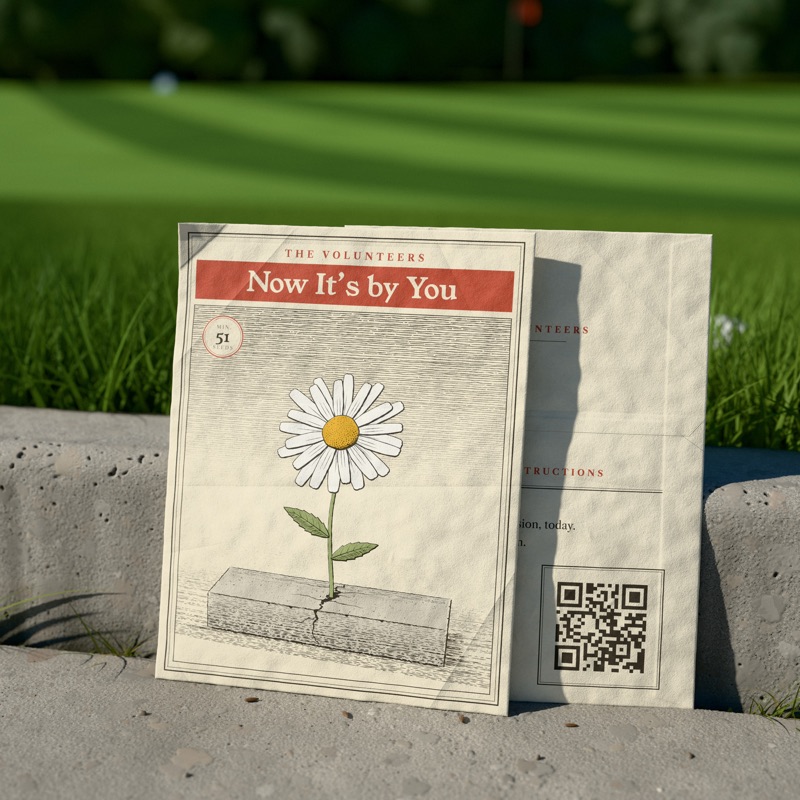
Now It's by You is a folk song passed between people and computers that explores music's ability to take on a life of its own, in verse and by embedding the software that sang it.
Run the program and you get a new version of the song, shaped by your computer and the season. Sing into it and it learns a little of your timing and inflection (your recording is deleted right after, and your voice is never cloned). The piece confronts the blurred authorship of AI music through the lens of folk music and oral tradition: it wonders who made it, and invites you to take part.
Make your own
The studio opens your version of the song for today, in your browser.
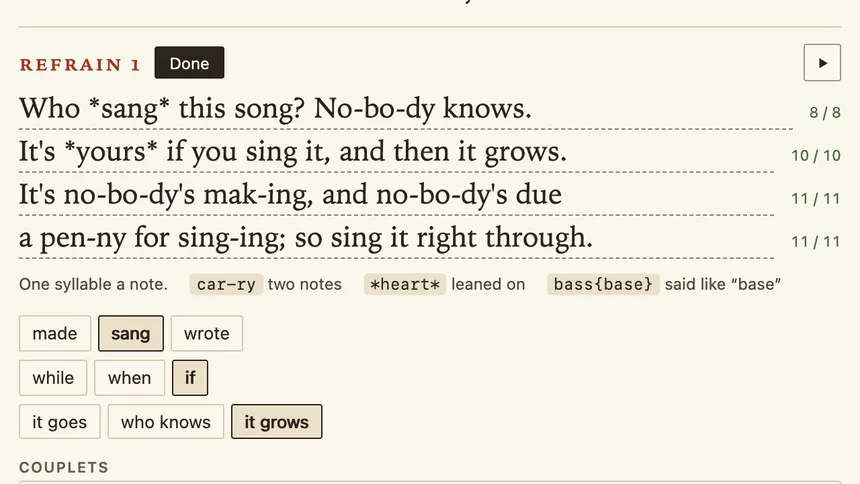
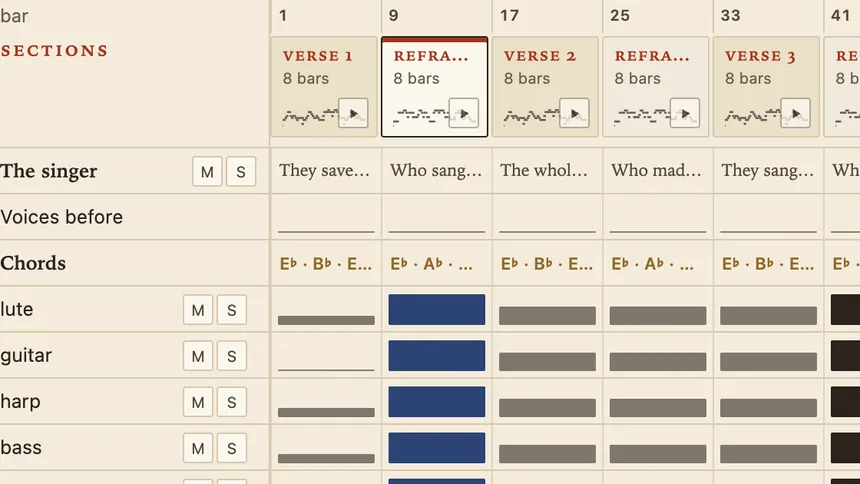
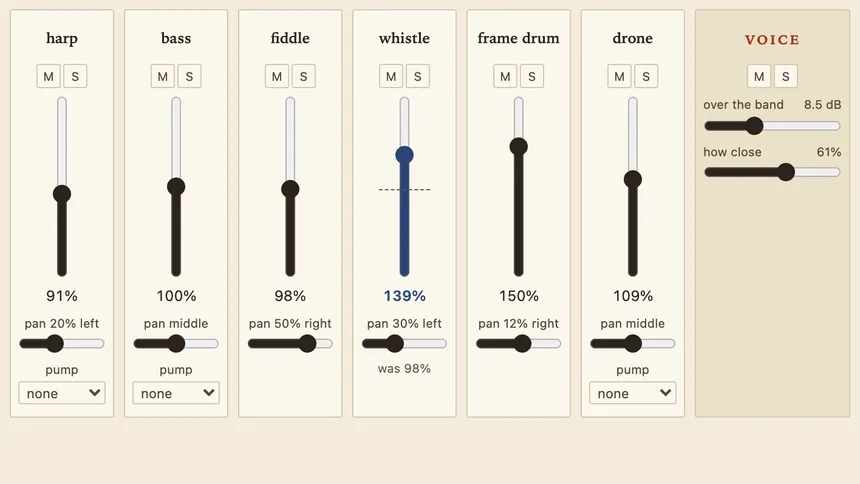
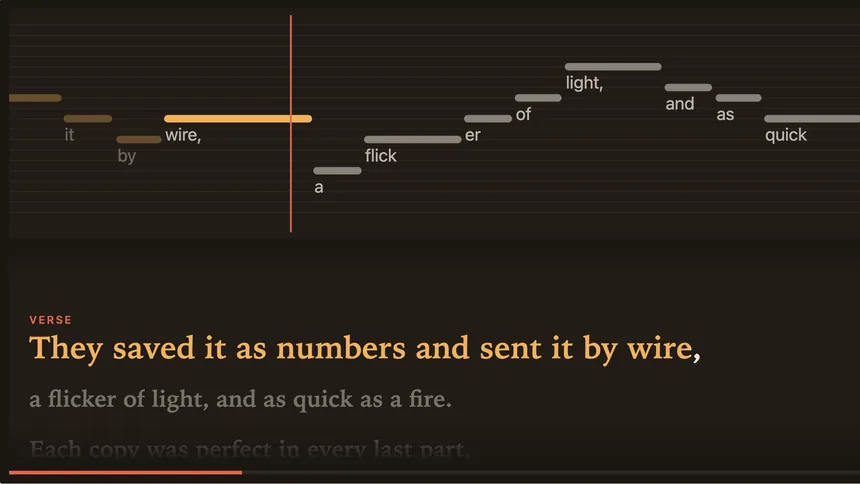
Or run the file
With Python 3.11 or newer:
python3 now-its-by-you.flac          what this is, and what you can do
python3 now-its-by-you.flac new      sing a new version here, today
python3 now-its-by-you.flac studio   change it and make your own
On Windows, py instead of python3. On an Intel Mac, use the studio.
The first run downloads its libraries (about 100 MB) and asks first.
Who made it
The music you hear is made by a small computer program, and every version it sings is a little different. The program and its song were written with commercial generative AI models as collaborators. The finished program is not dependent on any online service; it runs on an average computer using traditional software synthesis methods for instrumentation and a small offline model for the voice.
Eight people sang into the first version. Credited, as they asked: Amy Winningham, David S Winningham, fishman, Geoff Boothby, gorman and Milo Winningham. And two more who sang without credit.
The song, its program and every version are in the public domain. Questions, or something to report: milo@winningham.net.